Recipe onlinefamilyhomerecipes.com/recipe/martinska-hus-roast-goose-legs-red-cabbage-lokse/Scan the code to open the recipe on your phone
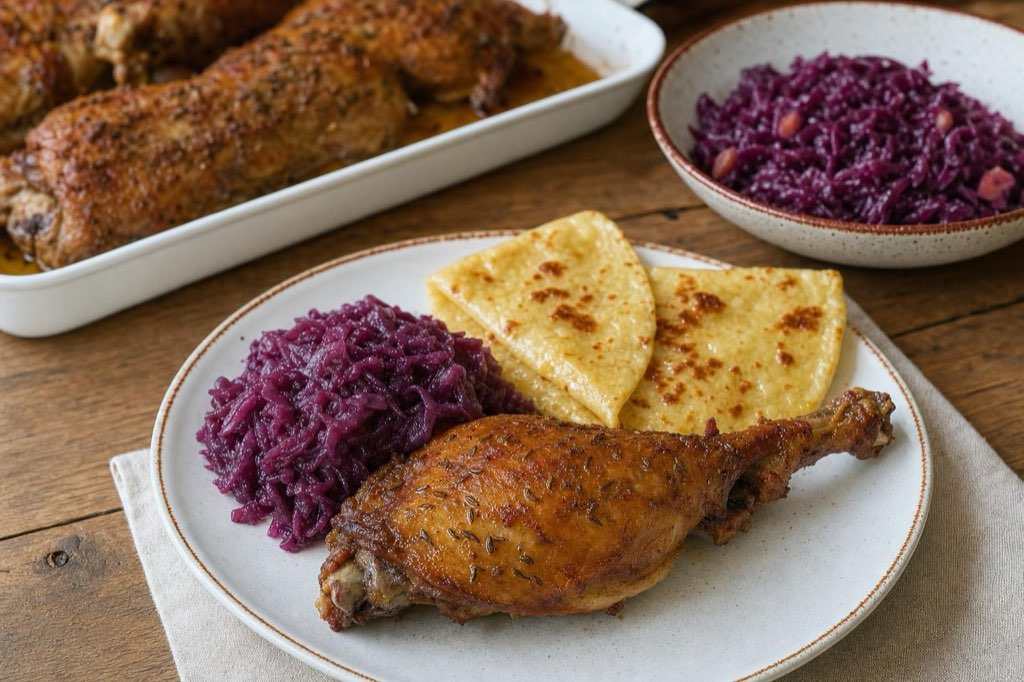
Martinská hus: roast goose legs with red cabbage and lokše
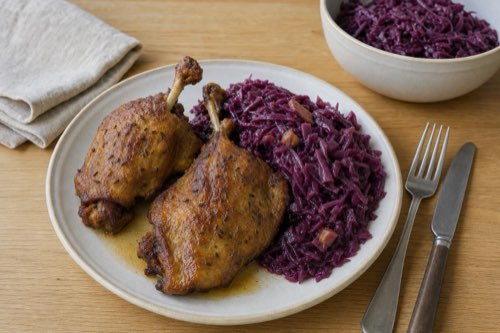
St. Martin's goose, Slovak style: goose legs roasted until tender and crisp, sweet-and-sour braised red cabbage and potato lokše. Serves 4.
 Save on Pinterest
Recipe at a glance
- Prep time
- 45 min
- Cook time
- 2 hr 45 min
- Temperature
- 160 °C (325 °F)
- Servings
- 4 servings
- Difficulty
- Medium
- Cuisine
- Slovak
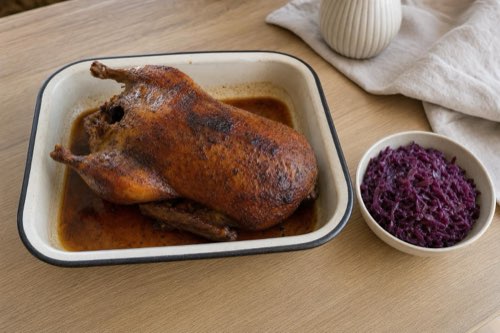
Martinská hus (St. Martin's goose) is prepared in Slovakia around St. Martin's Day on November 11, most often at home from goose legs. The legs are first roasted slowly under a lid so they become tender, and at the end without it so the skin turns crisp.
The legs are served with sweet-and-sour braised red cabbage and potato lokše (soft, thin flatbreads) brushed with the goose fat from roasting. You can prepare both the cabbage and the lokše while the meat is in the oven.
Ingredients
Goose legs
Braised red cabbage
Potato lokše
Tick off what you already have at home. Send the rest as a shopping list.
Instructions
Tip: tap a step to mark it as done.
Prepare the legs
Pat the legs dry and trim off the excess fat around the edges. Prick the skin in several places with a fork, taking care not to pierce the meat; this lets the fat drain out better during roasting.
Rub the legs on all sides with the salt, caraway, marjoram, and crushed garlic.
Roast covered
Preheat the oven to 160 °C (325 °F). Place the legs skin side down in a roasting pan, add 200 ml of water, cover with a lid or aluminum foil, and roast for 90 minutes.
Roast until tender
Turn the legs skin side up, spoon the pan juices over them, and roast, still covered, for another 45–60 minutes, until the meat pulls away easily from the bone. An older goose needs longer.
Finish until crisp
Uncover the pan, raise the temperature to 200 °C (400 °F), and roast the legs for another 20–30 minutes, until the skin is crisp and golden brown. Keep pouring the fat that renders from the legs into a bowl; you will use it for the cabbage and the lokše.
Prepare the red cabbage
While the legs are roasting, remove the outer leaves and the core from the cabbage and cut it into thin shreds. Finely chop the onion.
In a pot, heat 2 tablespoons of the goose fat, sauté the onion until translucent, and add the sugar; let it caramelize slightly. Add the cabbage, vinegar, caraway, and salt, stir, and pour in the water.
Braise the cabbage
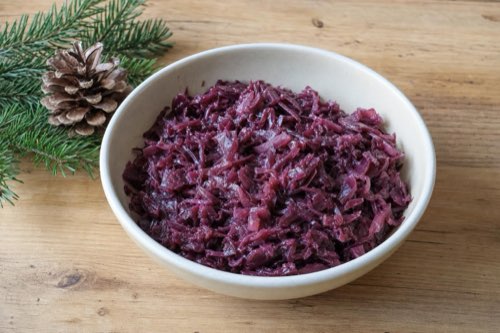
Braise the cabbage, covered, over low heat for 40–50 minutes, stirring occasionally. Halfway through, stir in the apple, coarsely grated. The finished cabbage is tender and sweet-and-sour; adjust to taste with sugar, vinegar, or salt.
Boil the potatoes for the lokše
Boil the potatoes in their skins until tender, 25–30 minutes depending on size. Peel them and let them cool completely. With warm potatoes the dough would need more flour and the lokše would turn out tough.
Make the lokše dough
Grate the cooled potatoes on the finest side of the grater or press them through a potato ricer, add the salt, and gradually work in the flour until you have a supple dough that does not stick. Divide it into 8 equal pieces.
Cook the lokše
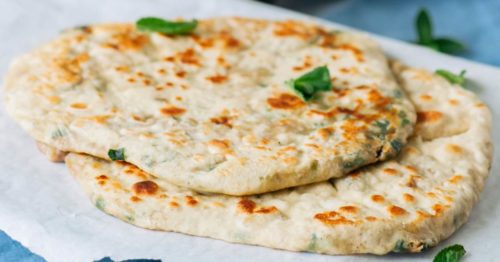
On a floured board, roll each piece into a thin flatbread about 22 cm in diameter. Cook it in a hot, dry skillet or on a griddle without any fat for 1–2 minutes per side, until it has brown spots.
Brush the finished lokše right away with goose fat, stack them, and cover with a kitchen towel so they stay soft.
Serve
Place a goose leg on each plate, with red cabbage and the lokše folded into quarters alongside.
Tip: Wrap leftover lokše in plastic wrap so they do not dry out. Warm them briefly in a dry skillet before serving and they will soften again.
This recipe was translated from the Slovak original: Martinská hus – pečené stehná s červenou kapustou a lokšami
Follow us
Recipe ideas every day on Facebook & Pinterest.