Recipe onlinefamilyhomerecipes.com/recipe/grated-horseradish-in-sweet-and-sour-brine/Scan the code to open the recipe on your phone
Grated horseradish in sweet-and-sour brine
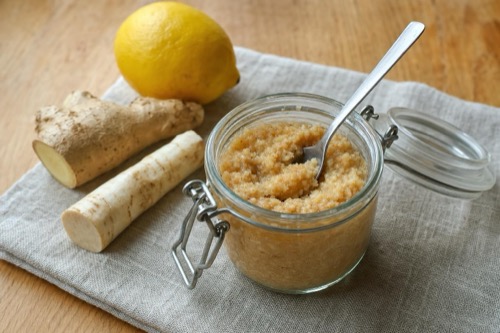
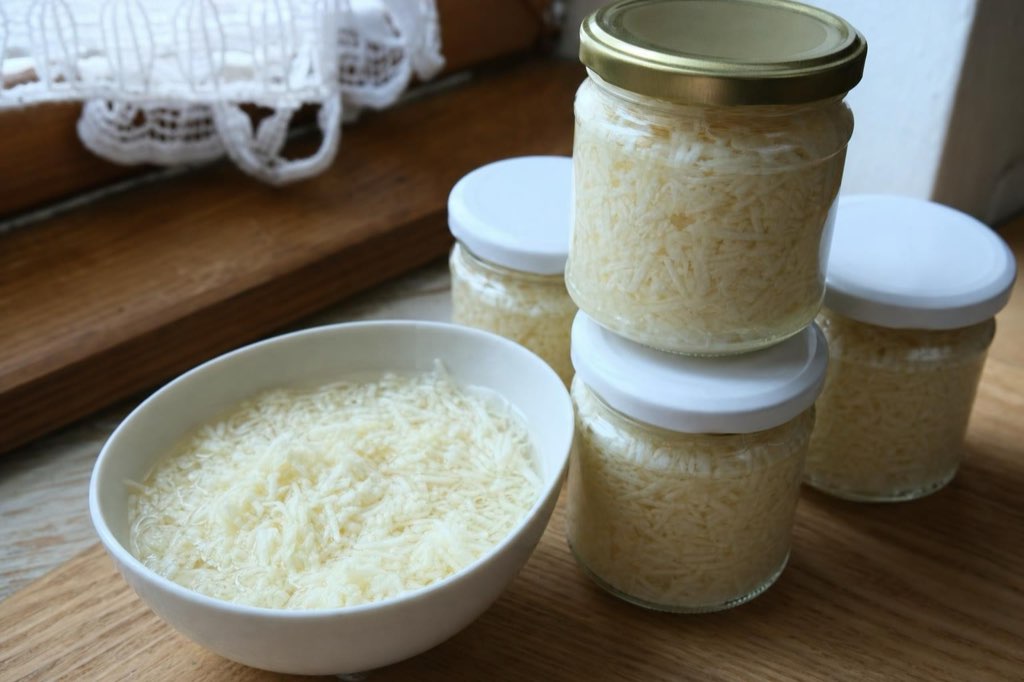
Grated horseradish in a water, vinegar, sugar, and salt brine, stored in jars in the refrigerator. Makes about 3 liters to serve with meat.
 Save on Pinterest
Recipe at a glance
- Prep time
- 30 min
- Servings
- About 3 liters
- Difficulty
- Medium
Grated horseradish in sweet-and-sour brine is a homemade condiment to keep on hand for meat, especially Easter ham. Peel the horseradish, grate it on a cheese grater, pack it into washed jars, and cover it with a brine of water, vinegar, sugar, and salt to taste. Close the jars and store them in the refrigerator. Grating horseradish releases a strong aroma that stings your eyes, so it is best to work outdoors or at least by an open window.
Ingredients
A grater and a large box of tissues
Tick off what you already have at home. Send the rest as a shopping list.
Instructions
Tip: tap a step to mark it as done.
- Stir sugar and salt into water to taste, then grate the peeled horseradish. While grating, be careful not to get horseradish in your eyes, and keep tissues handy for tears.
- Pack the horseradish into washed jars, pour in the prepared brine, close the jars, and refrigerate. Adjust the ingredient quantities to the size of the horseradish root; as a guide, you can prepare about 3 liters. Tip: Work with horseradish outdoors if possible, as its very strong aroma irritates the eyes.
- Tip: Use a cheese grater to grate the horseradish.
Tip: Cover the grated horseradish with the brine right away, as it quickly turns brown and loses its pungency when exposed to air. Vinegar helps preserve its white color and pungency.
Nutrition facts
Approximate values per 100 g, calculated from the ingredients
- Energy
- 114 kcal
- Protein
- 0.5 g
- Carbohydrates
- 28 g
- of which sugars
- 26 g
- Fat
- 0.3 g
- of which saturates
- 0.0 g
- Fiber
- 1.5 g
- Salt
- 9.3 g
Calculated from the raw ingredients, without frying oil. Where an amount is “to taste”, typical amounts are used. Food composition: USDA FoodData Central and product labels.
This recipe was translated from the Slovak original: Zaváraný strúhaný chren v sladkokyslom náleve
Follow us
Recipe ideas every day on Facebook & Pinterest.