Article onlinefamilyhomerecipes.com/recipe/spotted-bananas-how-they-differ-from-unripe-ones/Scan the code to open the article on your phone
Spotted bananas: how they differ from unripe ones
Learn how spotted bananas differ from green and yellow ones, why they become sweeter and softer as they ripen, and which to choose.
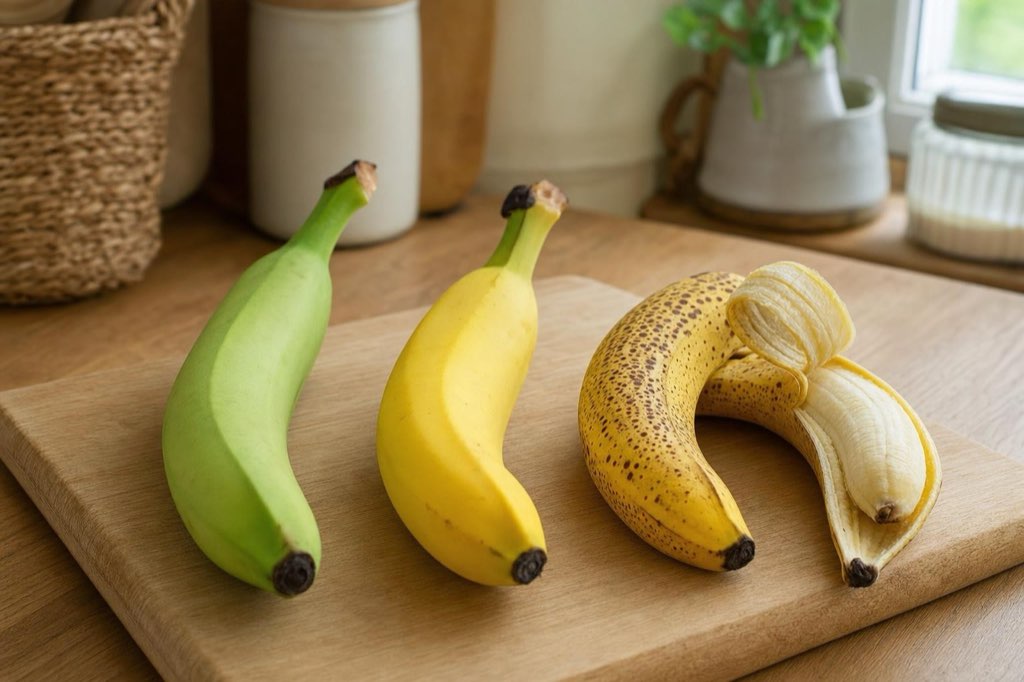
In shortBananas with dark spots on their peels are fully ripe and differ from green or yellow bananas in both flavor and composition.
As they ripen, the starch in the flesh gradually turns into sugars, making a ripe banana sweeter and softer. This article compares green, yellow, and spotted bananas and explores which ones to choose.
You can tell a ripe banana from an unripe one at a glance by the black dots and spots on its peel.
As a banana ripens, its composition changes and its starch gradually turns into sugars. The riper the banana, the more sugar it contains.
Which bananas should you avoid?
Eat ripe bananas with dark spots as soon as possible. A brown peel alone does not mean a banana has spoiled: an overripe banana is very soft and sweet and works well in baking, for example. However, discard a banana if it has mold, is leaking liquid, or smells musty or fermented. Ripe yellow bananas with a few small black spots are best for eating.
This article was translated from the Slovak original: Banány s tmavými bodkami – čím sa líšia od nezrelých
Follow us
Recipe ideas every day on Facebook & Pinterest.