Recipe onlinefamilyhomerecipes.com/recipe/homemade-christmas-mead/Scan the code to open the recipe on your phone
Homemade Christmas mead: start your honey, water, and yeast mixture in November
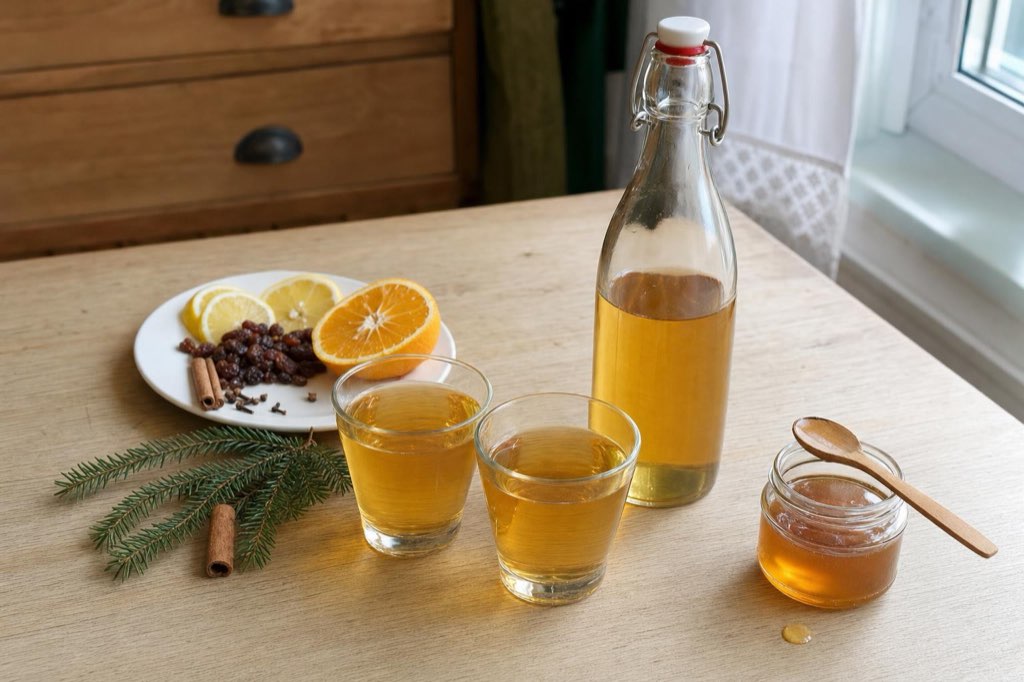
Homemade mead with honey, water, lemon, raisins, and wine yeast ferments for 4–6 weeks. Serve it chilled or warm with spices at Christmas.
 Save on Pinterest
Recipe at a glance
- Prep time
- 1 hr 5 min
- Servings
- 14 servings
- Difficulty
- Medium
Homemade mead is a drink made from honey and water that slowly ferments into alcohol with wine yeast. It ferments in a carboy fitted with an airlock for 4 to 6 weeks, so start it in the first half of November to have it ready for Christmas Eve. Young mead tastes sharper and mellows with additional months of aging. Using 1 kg of honey yields about 3.5 l with approximately 11 to 12% alcohol, calculated from the sugar in the honey. At Christmas, you can also serve it warm with spices. It contains alcohol and is not suitable for children, pregnant people, or anyone who will be driving.
Ingredients
Mead
For 1 l of warm mead
Tick off what you already have at home. Send the rest as a shopping list.
Instructions
Tip: tap a step to mark it as done.
Prepare the equipment
10 minWash a 5 l carboy, an airlock, a funnel, and a wooden spoon, then rinse them with hot water. You can buy all of these at a winemaking supply store, along with the wine yeast. Cleanliness is important, as wild yeast and bacteria could spoil the mead.
Dissolve the honey
20 minIn a pot, heat 1 l of the measured water to about 70 °C (158 °F) and stir in the honey. Hold at this temperature for 10 minutes without boiling, and skim off any foam with a spoon. Remove from the heat and pour in the remaining cold water.
Prepare the yeast
30 minLet the mixture cool to 25 to 30 °C (77 to 86 °F); a higher temperature would kill the yeast. Pour in the lemon juice and add the rinsed raisins. Stir the yeast into a little lukewarm water according to the package instructions and let stand for 15 minutes.
Start fermentation
5 minUse the funnel to pour the mixture, including the raisins, into the carboy, then add the yeast. Fit the carboy with the water-filled airlock. Never seal the carboy airtight, as the gas produced during fermentation must be able to escape.
Let ferment
Place the carboy in a dark spot at 18 to 24 °C (64 to 75 °F). It usually begins bubbling within two days and ferments for 4 to 6 weeks, or longer in a cooler room. It is ready when the airlock has not bubbled for at least 3 days and the sediment has settled to the bottom.
Bottle the mead
Using a clean siphon tube, carefully transfer the mead into bottles, leaving the sediment in the carboy. Seal the bottles and store in a cool place. The mead is drinkable immediately but will taste sharper; aging in a cool place will mellow its flavor. Do not bottle it while the airlock is still bubbling, as the bottles could burst.
Serve
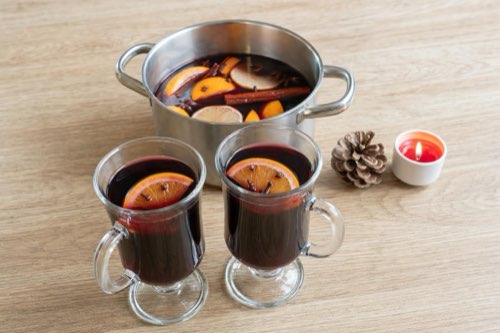
10 minPour chilled mead into small glasses, and let anyone who wants it sweeter add honey directly to their glass. For warm mead, heat 1 l with the cinnamon stick, cloves, and orange slices, but do not boil. Sweeten with honey and serve in mugs.
Tip: Skipping the heating step preserves more of the honey's aroma but gives wild yeast a greater chance to grow, so begin with the method given here. Never sweeten the mead in the bottles, as fermentation could restart and cause a bottle to burst.
This recipe was translated from the Slovak original: Domáca medovina na Vianoce: z medu, vody a kvasiniek, no nasadiť ju treba už v novembri
Did you cook this recipe?
Show us a photo of the finished dish. Once approved, other readers will see it too.
Photos can be sent by signed-in readers. Sign in with Google, Apple or your e-mail – no password needed.
Sign inThank you, we have received your photo
We will review it and once approved it will appear with the recipe.
You might also like
Anything left from your shopping?
Recipes that use up what this one leaves you with.
Planning your meals?
A weekly menu, your own meal plan and shopping lists – free, no sign-up needed.