Article onlinefamilyhomerecipes.com/recipe/instant-coffee-unfiltered-coffee/Scan the code to open the article on your phone
Instant or unfiltered coffee: which has more caffeine and which raises cholesterol
Learn how instant and unfiltered coffee differ in caffeine, cafestol, and acrylamide, with study findings and instructions for making both.
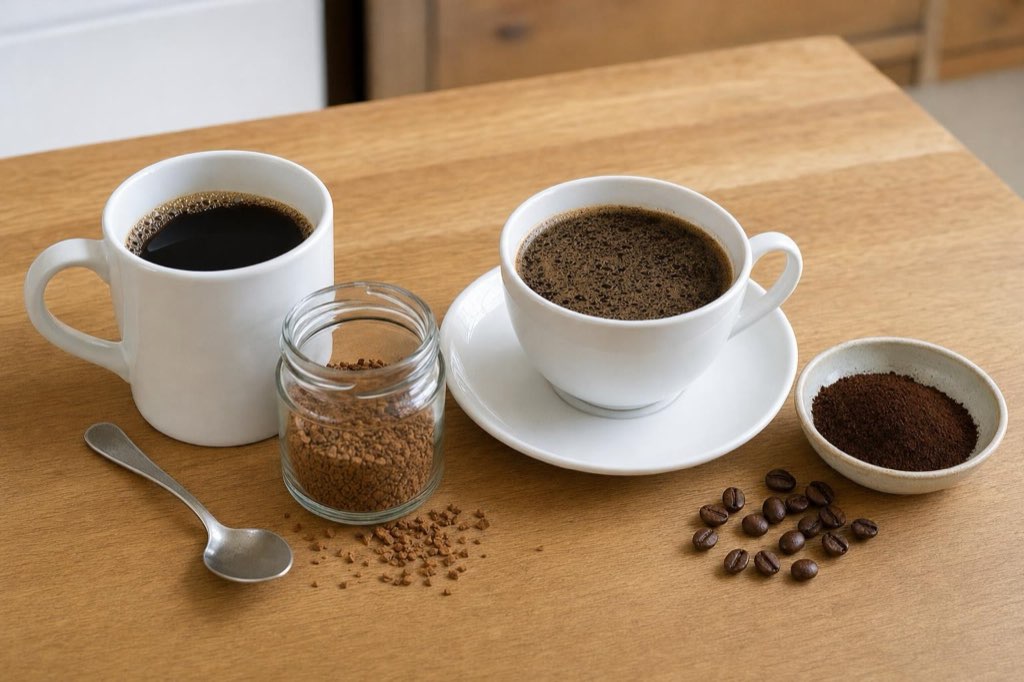
In shortCoffee steeped directly in a cup usually has more caffeine than instant coffee because you use more coffee. Without filtration, cafestol—a substance in coffee oil—also passes into the drink.
Instant coffee contains negligible amounts of cafestol, but its powder contains more acrylamide per kilogram, a substance formed during roasting. The figures come from an EU regulation, the European Food Safety Authority (EFSA), and research studies. Instructions for preparing both types of coffee are included at the end.
How instant and unfiltered coffee differ
Instant coffee is brewed coffee from which the manufacturer has removed the water. Hot-air drying produces powder or granules, while freeze-drying produces irregular crystals. It dissolves completely in the cup, leaving nothing at the bottom.
Unfiltered steeped coffee is finely ground roasted coffee with hot water poured over it directly in the cup. The grounds steep in the water for several minutes, then settle to the bottom, and you drink the liquid above them. Nothing filters it—this is the main difference from drip coffee made with a paper filter. In Slovakia, it is often called Turkish coffee, although authentic Turkish coffee is cooked with sugar in a small pot.
Which has more caffeine
The amount of caffeine in your cup depends on how much coffee you put in it. The beans matter, too: according to a review in the journal Foods, green robusta beans contain 1.2–2.4% caffeine, while arabica contains 0.9–1.5%.
- Instant coffee: According to the American food database USDA, the powder contains about 3.1 g of caffeine per 100 g. Nescafé gives a typical serving as 1.8 g, or about a teaspoon per 200 ml of water. That cup contains just under 60 mg of caffeine; using two teaspoons doubles the amount.
- Unfiltered steeped coffee: Several times more ground coffee goes into a cup, usually two heaping teaspoons. According to the USDA, coffee brewed from ground beans contains about 40 mg of caffeine per 100 ml, or around 80 mg in a 200 ml cup. Stronger unfiltered coffee in a smaller cup contains more.
With typical amounts, unfiltered steeped coffee therefore has more caffeine. But if you use two heaping teaspoons of instant coffee, the difference disappears. Britain's NHS estimates about 100 mg of caffeine per cup of instant coffee and adds that filter coffee may contain more.
According to the European Food Safety Authority (EFSA), up to 400 mg of caffeine per day and up to 200 mg at a time do not raise safety concerns for healthy adults. For pregnant and breastfeeding women, the amount is up to 200 mg per day from all sources, including tea, cola, and energy drinks. A total of 400 mg is roughly five 200 ml cups of coffee brewed from ground beans. Even a single 100 mg dose can affect sleep duration and patterns in some adults, so skip evening coffee if you have trouble sleeping.
Which coffee raises cholesterol
Coffee bean oil contains cafestol and kahweol, substances that raise blood cholesterol in humans. In a 1995 study, Dutch researchers Urgert and colleagues reported that every 10 mg of cafestol consumed daily raises cholesterol by about 0.13 mmol/l. A paper filter traps the oil droplets containing these substances; a metal strainer or letting the grounds settle at the bottom of the cup does not. They measured the following amounts per cup:
- Turkish and Greek coffee: about 3.9 mg of cafestol,
- French press coffee: 3.5 mg,
- Scandinavian boiled coffee: 3.0 mg,
- Espresso: 1.5 mg,
- Instant coffee, drip coffee made with a paper filter, and percolated coffee: negligible amounts.
According to the authors, five cups of unfiltered coffee a day could raise cholesterol by about 0.2–0.26 mmol/l (8–10 mg/dl). Decaffeinated coffee contained as much cafestol as regular coffee. The researchers did not measure coffee steeped directly in a cup separately, but it is prepared similarly to Turkish coffee: the grounds remain in the water, and nothing filters it.
If you have high cholesterol, discuss coffee with your doctor. Instant coffee and drip coffee made with a paper filter contain almost no cafestol.
What about acrylamide in instant coffee
Acrylamide forms when coffee is roasted, just as it does when French fries are fried or bread is toasted. EFSA states that acrylamide in food potentially increases cancer risk in all age groups and that fried potatoes and coffee are the main sources for adults. Under EU Regulation 2017/2158, manufacturers must therefore keep it as low as possible, below benchmark levels of 400 µg/kg for roasted coffee and 850 µg/kg for instant coffee. These are not limits—they are used to assess whether manufacturers are following measures to reduce acrylamide.
Instant coffee powder can therefore contain roughly twice as much acrylamide per kilogram as roasted coffee. However, you use several times less of it per cup than ground coffee, so a prepared cup of instant coffee does not necessarily contain more acrylamide. Coffee substitutes made exclusively from chicory have the highest benchmark level, at 4,000 µg/kg; those made exclusively from grains have a benchmark of 500 µg/kg.
Flavor, aroma, and coffee in recipes
Unfiltered coffee made with freshly ground beans has a fuller aroma, and you can adjust its strength and flavor through the amount and blend you use. However, sediment remains at the bottom, and the last few sips are cloudy. Instant coffee dissolves in seconds, tastes the same each time, and works well in recipes that need coffee flavor without extra liquid—in cream fillings, glazes, and batters.
Examples include coffee bean-shaped Christmas cookies with cocoa, cake with coffee cream and chocolate whipped cream, and Prague cake. To soak ladyfingers for tiramisu, you need brewed, cooled coffee—either coffee steeped in a cup and poured through a strainer or instant coffee will work.
How to make unfiltered steeped coffee
- Put 2 heaping teaspoons of finely ground coffee in a cup for every 150–200 ml of water.
- Bring the water to a boil, then let it stand for about half a minute so it is no longer boiling.
- Pour the water over the coffee, stir, and let stand for 3–4 minutes until the grounds settle to the bottom.
- Only then add sugar and milk, stirring gently near the surface to avoid disturbing the sediment.
- Leave the last few sips containing sediment in the cup.
How to make instant coffee
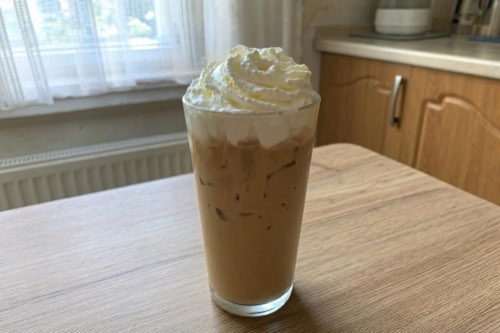
According to Nescafé, 1.8 g of powder, about one teaspoon, is enough for 200 ml of water. Add another teaspoon for stronger coffee. Pour hot water at around 85 °C (185 °F), not boiling water, over the powder and stir. For iced coffee, dissolve it in hot water and let it cool, as in our iced coffee with ice cream and egg liqueur.
Coffee recipes on our website
- Turkish coffee cooked with sugar in a small pot
- Hot coffee with rum, orange jam, and whipped cream
- Coffee with black tea, condensed milk, and whipped cream
- Iced coffee with ice cream and egg liqueur
- Homemade Baileys with whiskey, coffee, and condensed milk
For a caffeine-free evening, try 3 caffeine-free drinks: lemon, ginger, and banana.
Tip: For the flavor of coffee steeped directly in a cup without the sediment and with less cafestol, pour it through a paper filter into a second cup after 4 minutes.
This article was translated from the Slovak original: Instantná alebo zalievaná káva: v ktorej je viac kofeínu a ktorá zvyšuje cholesterol
Follow us
Recipe ideas every day on Facebook & Pinterest.
Recipes from this article
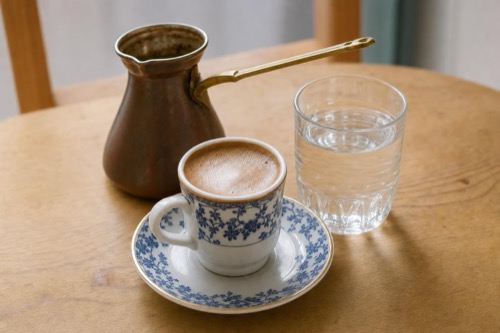
Turkish coffee with sugar in a small pot
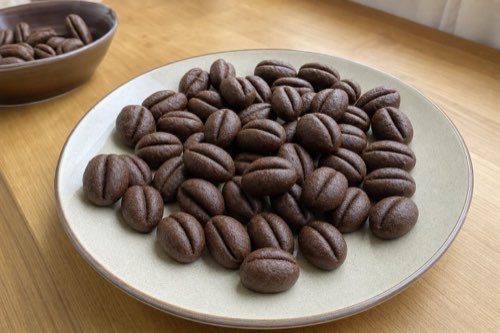
Christmas coffee bean cookies with cocoa
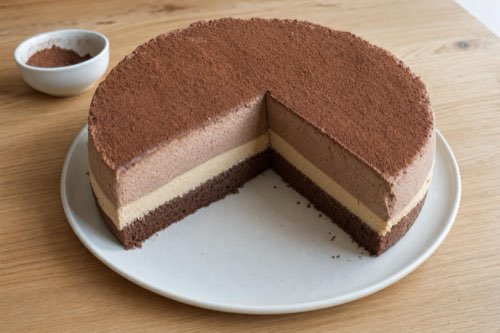
Chocolate cake with coffee cream and chocolate whipped cream
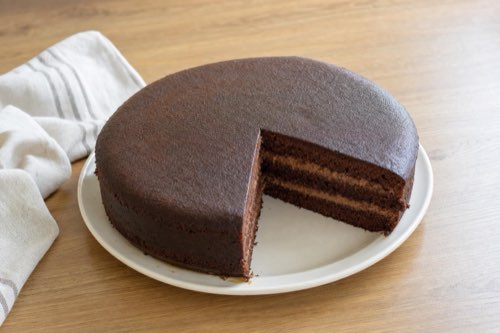
Praha chocolate cake with caramel filling and coffee glaze
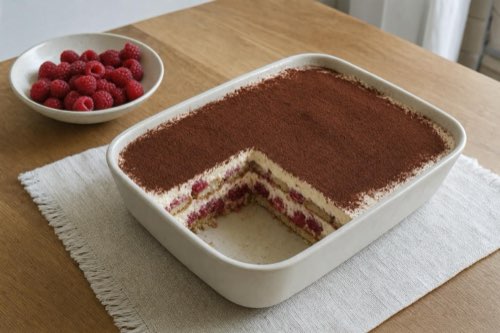
Raspberry tiramisu with mascarpone and ladyfingers
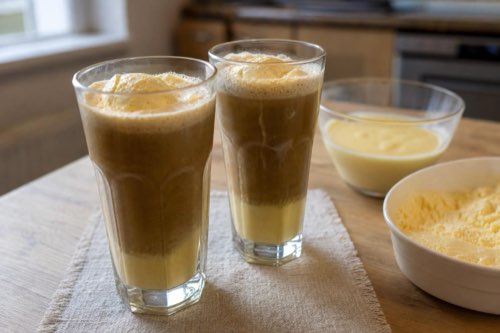
Iced coffee with ice cream and egg liqueur

Hot coffee with rum, orange jam and whipped cream